
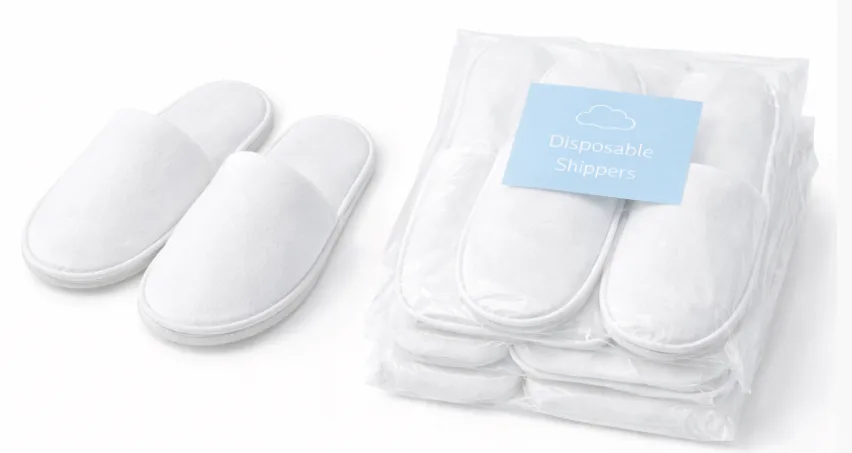
Guest slippers are a small line with an outsized effect on how a room feels. They are also one of the easiest amenities to over- or under-spec, because "hotel slippers" spans everything from a paper-thin non-woven pair for a budget motel to a plush coral-fleece slipper for a five-star resort. For a distributor or purchasing manager, getting the material, sole and packaging right — and matched to the property's tier — is what makes a quote competitive without cheapening the guest experience. This guide breaks down the choices.
The Material Ladder
Slipper cost is driven first by the upper fabric. From entry to premium, the common materials are:
Non-woven — the economy standard. Lightweight, disposable-grade, minimal padding, usually paired with a thin 1 mm sole. Cheapest per pair and the default for budget and high-turnover properties.
Coral fleece — soft, warm and plush with a dense pile; a popular mid-to-premium upgrade that feels far more comfortable than its modest cost increase suggests.
Terry cotton — 100% cotton looped towelling, absorbent and breathable, the classic mid-range hotel slipper. Comfortable underfoot and easy to brand.
Waffle — 100% cotton in a textured waffle weave, lightweight and clean-looking; favoured by design-led and boutique properties.
Velour and pleuche — dense, velvety closed-toe fabrics that read as luxury; typical of four- and five-star and spa use.
Cotton-linen and brushed fabrics — natural-look or brushed-soft options that suit eco-positioned and premium-casual brands.
Grammage (the fabric weight) is the number that separates a thin, floppy slipper from a substantial one within the same material. Because it varies by supplier and construction, ask the factory to state the upper-fabric weight and pile height on the datasheet rather than relying on a photo — two "terry slippers" can feel completely different at the same headline price.
Soles: Where Comfort and Safety Live
The sole is the second cost driver and the main safety feature. Most hotel slippers use EVA (ethylene-vinyl acetate) foam soles in 1 mm, 3 mm or 5 mm thickness — thicker soles feel more cushioned and more premium underfoot. A thin 1 mm sole belongs on an economy non-woven slipper; 3 mm suits mid-range; 5 mm is standard for comfort and premium tiers. Two points to confirm on every quote: a non-slip textured base (a genuine safety consideration on bathroom tile, and a liability point for the property), and whether the sole is a simple foam pad or a laminated construction that holds its shape over a multi-night stay.
Open Toe or Closed Toe
Both formats sell across every tier; the choice is about brand feel and season. Open-toe slippers are lighter, cheaper, breathe better, and are common in warm climates and spa settings. Closed-toe slippers feel warmer, more enclosed and more premium, and photograph better in a luxury room set. Many properties stock open-toe as the room default and closed-toe for suites, or switch seasonally.
Cost Tiers by Star Rating
The same slipper checklist applies at every tier — what changes is material grade, sole thickness and packaging. Mapping the options to property level:
| Tier | Typical Property | Upper Material | Sole | Packaging |
|---|---|---|---|---|
| Economy | 2–3★, motels, hostels | Non-woven | 1 mm EVA | OPP/PP bag, unbranded or simple print |
| Mid-range | 3–4★, chains | Terry cotton or waffle | 3–5 mm EVA, non-slip | OPP bag with logo, or non-woven bag |
| Premium | 4–5★, resorts, spa | Coral fleece, velour, pleuche | 5 mm EVA, non-slip laminated | Non-woven or fabric bag, logo print/embroidery |
Always ask your supplier for a tier-mapped quotation so a hotel client can compare economy, mid and premium side by side rather than guessing what a price gap represents. Slippers sit inside the wider hotel disposables and guest amenities range, and are usually quoted alongside it.
Branding and Packaging
Slippers are a branding surface, and packaging is where the perceived value is set. Economy pairs ship in a plain OPP polypropylene bag; mid and premium pairs move to a printed OPP bag, a non-woven pouch, or a fabric bag with the property's logo printed or embroidered. Confirm the print method (screen print, woven label, or embroidery), the artwork MOQ per design, and whether the supplier will hold branded packaging stock for repeat orders so reorders ship faster.
Sustainability: A Growing Request
Hospitality buyers increasingly ask for lower-impact amenities, driven by chain ESG policies and tightening EU packaging rules. For slippers specifically, the practical levers are recyclable or paper-based bags instead of plastic OPP, natural fibres such as cotton, waffle or cotton-linen, and reduced or refill-friendly packaging. It is worth distinguishing this from the EU's amenity rules that target single-use plastic toiletry packaging (dispensers replacing miniature bottles) — those apply to cosmetics and toiletries, not to slippers themselves — but the same guest and brand pressure toward less plastic and more natural materials clearly extends to footwear. Our guide to biodegradable and plastic-free hotel amenities covers the regulations SKU by SKU.
Ordering Logistics
Slippers are light but bulky, so container planning is about cube, not weight. Fix the recurring room set — the day-to-day open-toe or closed-toe pair — and top up seasonal or suite-tier items separately. Because they combine well in a mixed container with toiletries, cleaning supplies and other amenities, slippers rarely justify a dedicated shipment and are better consolidated. See how our consolidation and OEM services handle mixed loads.
FAQ
What MOQ should I expect for logo slippers? Typically from a few thousand pairs per printed design; neutral stock slippers can ship in smaller quantities alongside other amenities in the same order.
How do I compare two "terry slipper" quotes? Check upper-fabric grammage and pile height, sole material and thickness, non-slip base, and toe style — most price gaps hide in these four details rather than in the headline material name.
Which tier should I stock for a mixed hotel portfolio? Offer all three and let each property choose: economy non-woven, mid-range terry/waffle, and premium coral fleece or velour. A tier-mapped range is easier to sell than a single option.
Can slippers ship with the rest of my amenity order? Yes — slippers consolidate naturally with toiletries, dental kits and other disposables in one mixed container, which improves cash flow for smaller distributors.
Building a hotel slipper program? Send your target tier, quantities and branding needs — we'll return a tier-mapped quote with materials, sole options and packaging. → Contact HOPE International