
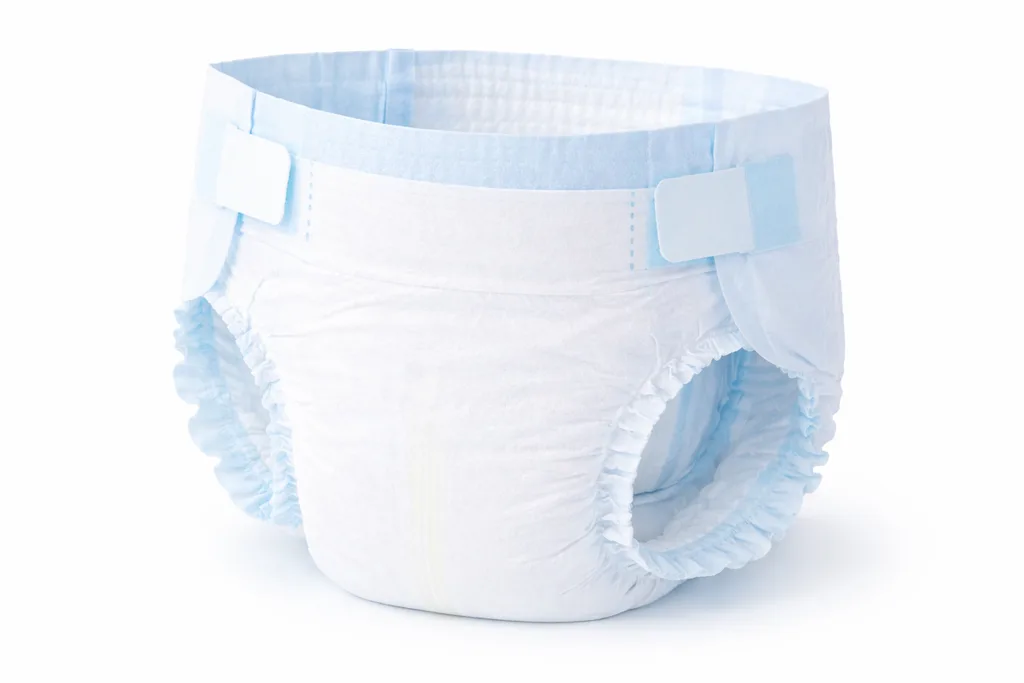
Care homes and home-care services are among the most stable customers a hygiene distributor can serve: incontinence products are used every day, in predictable quantities, under contracts that renew for years. But supplying this channel well means offering a coordinated range — not just "adult diapers" — and being able to talk about absorbency, fit and skin health the way a care manager does. This guide covers the product families, the specifications that matter, and how to plan quantities when buying adult care products wholesale.
The Core Product Range
A care-home assortment is built around matching the product to each resident's mobility and level of incontinence:
| Product | Format | Typical User | Notes for Buyers |
|---|---|---|---|
| Tape diapers (briefs) | Open style with refastenable side tapes | Bed-bound or limited-mobility residents; night use | The volume line in most care homes; day and night absorbency versions |
| Pull-up pants | Underwear style, tear-away sides | Ambulatory residents; promotes independence | Growing share as care philosophy shifts toward dignity and self-care |
| Insert pads + fixation pants | Two-piece system | Light to moderate incontinence | Lower cost per change; washable fixation pants are reused |
| Underpads (bed pads) | Flat pads, common sizes 60×60 and 60×90 cm | Bed and chair protection for all residents | Consumed alongside every other product; easy add-on line |
| Adult bibs | Disposable or washable | Mealtime protection | Small item, steady reorders |
| Wet wipes | Soft pack, adult-size sheets | Every change routine | Natural companion SKU (see our hospitality wet wipes guide) |
| Patient wear | Disposable gowns and clothing protection | Care and clinical settings | Rounds out a nursing-care catalog |
The commercial logic: a supplier who quotes the whole table in one shipment replaces four or five vendors for the care-home group — and each product pulls reorders of the others. Explore the full range on our nursing care products page.
Absorbency: The Specification That Structures the Range
Absorbency is how the category is tiered and priced. The laboratory reference is ISO 11948-1 (the "Rothwell method"), which measures a product's total absorption capacity; factories quote it in grams or millilitres per piece. Two things matter when reading these numbers. First, total capacity is a laboratory ceiling — practical working capacity in use is significantly lower, which is why day products and night products are separate SKUs rather than one "maximum" product. Second, capacity alone doesn't describe performance: ask also for rewet (how dry the surface stays under pressure) and acquisition speed, which reflect the core design — fluff pulp, superabsorbent polymer (SAP) ratio and the acquisition layer — rather than just its size. A serious factory can provide a per-SKU table of absorbency tiers with test data behind it.
Sizing and Fit
Leakage complaints are usually fit problems, not absorbency problems. Adult products are sized by waist/hip measurement — typically M, L and XL, with S and XXL available in some lines — and a care home needs at least two sizes stocked per product type. Fit features worth specifying: refastenable tapes that survive repositioning, elastic waistbands and leg cuffs, and breathable side panels on pants. Confirm the size chart printed on packaging matches your market's conventions before artwork goes to print.
Skin Health and Materials
Residents may wear these products for years, so skin integrity is the quality conversation care managers care most about. The spec points to ask for: a breathable backsheet (cloth-like laminated film rather than plain PE), a soft hydrophilic topsheet, wetness indicators that tell staff when a change is actually needed, and pH-friendly contact layers. For assurance, ask for third-party test reports and OEKO-TEX certified raw materials where available. Avoid medical claims on packaging — in most markets these are general hygiene products, not medical devices, but chemical-safety and labeling rules still apply.
Planning Quantities for Care-Home Contracts
A useful planning habit for this channel: think in changes per resident per day, not pieces per carton. Care homes commonly plan several changes per resident per day across the product mix (the exact number depends on care protocols and resident profiles), which converts a 60-bed home into a predictable monthly volume per SKU. That predictability is why standing orders and scheduled shipments work so well here — and why running out is commercially unforgivable. Build safety stock for the volume lines (tape diapers, underpads) and review the mix quarterly as resident profiles change.
Private Label and OEM
Adult incontinence lines come from the same manufacturing base as baby diapers — the materials, core technology and OEM process are directly parallel, including printed packaging film as the MOQ driver. Distributors who already run a private-label baby line can extend the brand into adult care with the same factory logic; first orders are typically planned at container level per brand. See also: our private label baby diapers OEM guide.Learn more about our OEM and consolidation services.
Ordering and Logistics
Incontinence products are light but bulky, so container planning is about cube: a 40ft high-cube of mixed adult-care SKUs is the standard unit of purchase. Mixing tape diapers, pants, underpads, wipes and bibs in one container is routine and lets a distributor serve a full care-home tender from a single shipment. Ask your supplier for a loading plan that matches your actual SKU mix rather than a per-product theoretical count.
FAQ
Pants or tape diapers — which should a care-home supplier lead with? Both, in a roughly resident-profile-driven mix: tape briefs for bed-bound and night care, pants for ambulatory residents. Tenders increasingly ask for both plus underpads in one lot.
What absorbency should night products have? Night briefs sit in the higher-capacity tiers with low rewet as the key number. Ask for ISO 11948-1 data plus rewet results, and trial samples with the care team before committing volume.
Do these products need CE marking? In most markets adult incontinence products are consumer hygiene goods rather than medical devices, but labeling and chemical-safety rules still apply — confirm the destination market's requirements before printing packaging.
What MOQ should I expect for private label? Neutral packaging ships in smaller mixed quantities; branded lines are driven by printed-film MOQs, typically planned at one container per brand for a first order.
Supplying care homes or building an adult-care line? Send us your product mix and destination market — we'll return specifications, absorbency tiers and a container plan. → Contact HOPE International