
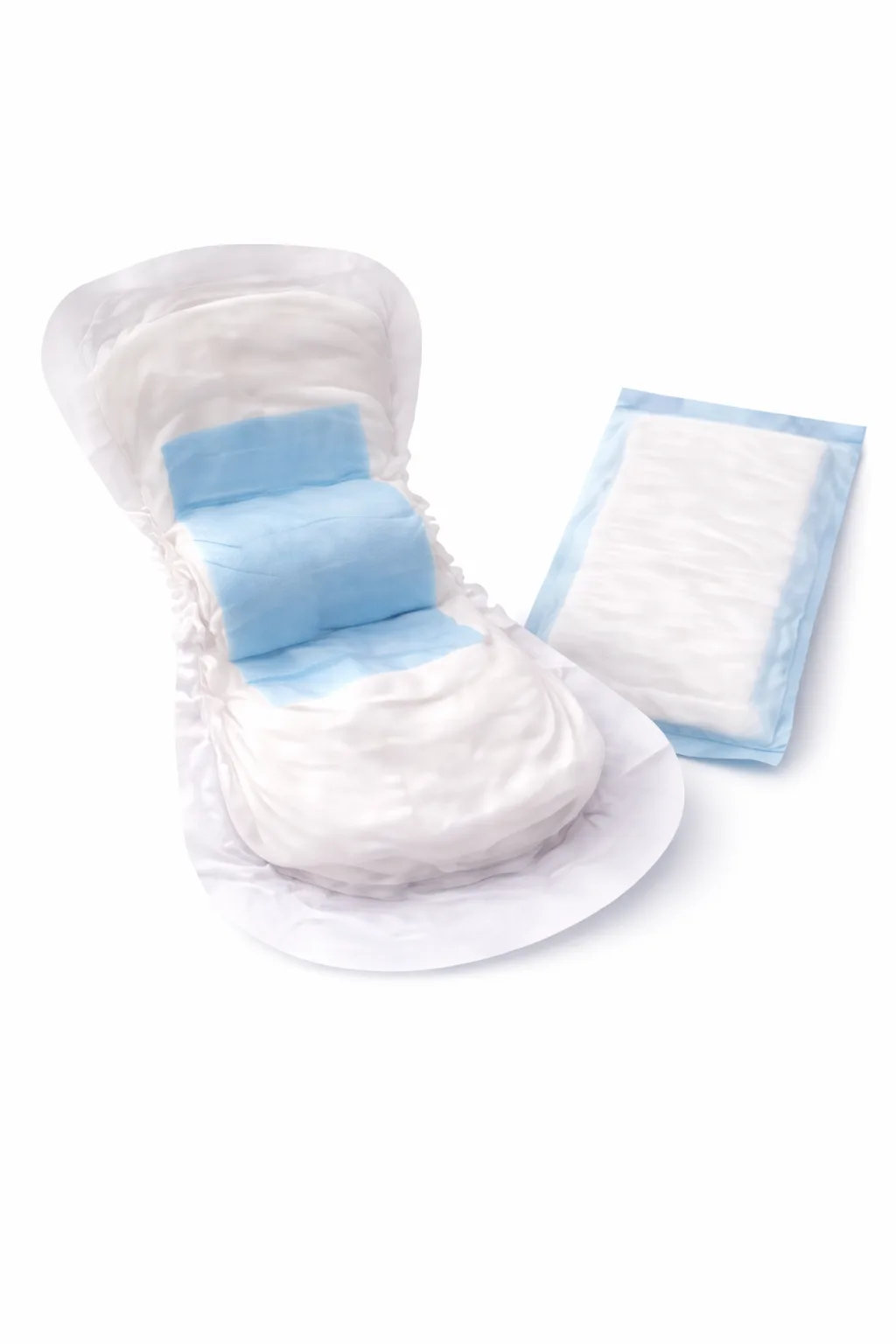
One line of artwork copy decides which regulatory column your nursing pads sit in, and it is usually written by a marketing team that has never heard of the consequence. In the US, a nursing pad sold with nipple-care claims lands under the nipple shield regulation, 21 CFR 880.5630 — FDA's classification database carries cohesive-gel nursing pads as Class I under it, product code NXH, with an absorbent sterile breast pad cleared in 2005 under NTX in the same family. The boundary is narrow: FDA-sourced material notes the nipple shield definition does not cover nursing pads intended solely to protect the clothing of a nursing woman from milk.
So "absorbs leaks, keeps clothing dry" and "soothes sore, cracked nipples" are not two styles of the same sentence. The first is a bra insert; the second moves the same physical pad into the device column, with establishment registration, device labelling and a complaint file behind it. Agree the claim set before anyone orders printed film — the film is the part you cannot re-cut.
Maternity pads are the calmer half of this category. In the US an unscented pad for absorbing menstrual or other vaginal discharge falls under 21 CFR 884.5435, Class I and exempt from premarket notification — but only where it is made of common cellulosic and synthetic material with an established safety profile, subject to §884.9, and establishment registration still applies. A botanical additive or an antimicrobial finish walks the product straight back out of that exemption.
What actually sits in the specification
Both products are a stack, and the money is in the layers rather than the outline. Ask for this filled in per SKU before you compare prices.
| Specification line | Maternity / postpartum pad | Nursing pad | Why it moves the price |
|---|---|---|---|
| Overall size | Length and width in mm, stated flat; wing or no wing | Diameter or contoured dimensions in mm, cup depth | Material cost scales with area, not with the label |
| Topsheet | Perforated or plain nonwoven, gsm stated | Soft nonwoven or cotton-faced, gsm stated | gsm is the first place a cheaper quote takes a cut |
| Acquisition layer | Present or absent, gsm | Usually absent | Its absence shows as rewet on the bench, not on the spec sheet |
| Core | Fluff pulp weight in g plus SAP weight in g, stated separately | Fluff and SAP, or airlaid; weight in g | A combined "core weight" hides the fluff/SAP ratio, the real cost lever |
| Backsheet | PE film micron, breathable or plain | PE film micron, breathable or plain; leak-proof claim | "Breathable" is a film choice with a cost; ask for micron and type |
| Adhesive | Centre strip width and release paper | Adhesive dots or strip to hold in the bra | Adhesive pattern is the top complaint driver in nursing pads |
| Primary pack | Loose in bag, or individually wrapped | Individually wrapped, pairs or singles | Wrapping changes machine time, film area and count-per-case |
Where two quotations for the same pad differ
The spread sits in six places, in roughly this order of money:
- Fluff-to-SAP ratio in the core. SAP costs more per gram than pulp and absorbs far more, so two pads at one core weight are not one product.
- Topsheet and backsheet gsm/micron. A few gsm across a container is real money, and invisible in a photograph.
- Individual wrapping. Wrapped pads run at a different machine rate from bulk-bagged.
- Printed film. Print is sold against a minimum run of film, not against your pad quantity.
- Test and documentation scope. Per-batch absorbency and trace-chemical testing, or a type test on file.
- Claim set. A nipple-care claim brings a regulatory route with it, and the route is a cost line.
RFQ fields, ordered by how much they move the number
- Destination market, and the exact claim set you intend to print.
- Core construction: fluff grams and SAP grams, stated separately, with the tolerance you accept.
- Topsheet and backsheet: material, gsm or micron, breathable or plain.
- Individual wrapping yes or no, and count per bag and per case.
- Size set and the split across sizes.
- Print: number of colours, bleed, language versions, and who owns the artwork.
- Test methods you will hold the goods to, with method number and edition.
- Inspection stage, who pays, and your annual volume and call-off pattern.
Test methods: name the number, not the adjective
"Highly absorbent" is not a specification. The industry test catalogue for absorbent hygiene products is the EDANA/INDA NWSP set, and the useful discipline is to name a method and its revision in the purchase order rather than accept a lab sheet headed "absorbency test". Two cautions from the catalogue itself:
- Sources disagree on which NWSP number covers acquisition and rewet for this family — EDANA's index lists a rate-of-acquisition and rewet method alongside a repeated strike-through method, while third-party lab guides swap the numbering. The fix is procedural: require the laboratory to print the method number and revision on the report.
- Centrifuge retention capacity has its own method in the same catalogue, and blotter-based tests specify the blotter: basis weight 139 ± 11 g/m², absorption capacity at least 480 per cent, first strike-through 2 seconds or less. Without that spec on the report, its numbers are not comparable with anyone else's.
A third method is worth knowing for private label: NWSP 360, recognised by CEN as CWA 18062 in 2023, is the harmonised method for trace chemicals in absorbent hygiene products. European retailer questionnaires increasingly ask for it by name, and it takes lab time.
Ask each supplier to quote against the test methods named in the purchase order, and to share the laboratory report with the method number and revision on it rather than a summary sheet. We accept the inspection company you nominate, or we use the inspection company we work with on a continuing basis.
Inspection and the AQL question
Sampling is the uncontroversial part: ISO 2859-1, general inspection level II, lot defined as the production batch, with during-production inspection near the 20 per cent mark and pre-shipment inspection on the sealed load.
Hygiene pads carry no statutory acceptance number. Examination gloves are the exception that confuses people — AQL 2.5 under 21 CFR 800.20 in the US, 1.5 under EN 455-1 in the EU — so a supplier quoting "the usual AQL 1.5" for pads is reading a glove standard at you. Define the classes yourself with named examples: adhesive failure, core displacement, wrap seal leak, print misregistration, count short in the bag.
Packing, cube and the tariff lines
Pads are pure cube: they fill a container long before they trouble the payload. As planning figures, a 20ft box takes roughly 26–28 m³ of export cartons, a 40ft 55–58 m³ and a 40HQ 65–68 m³ — typical ranges, not a loading guarantee.
| Commercial term | What to fix in the purchase order |
|---|---|
| Packing hierarchy | Individual wrap or inner bag → retail bag → export carton → pallet, with count at every level and carton dimensions and gross/net weight per SKU |
| Count reconciliation | Reconcile by piece, not by bag. A 10-pad bag and a 12-pad bag at the same carton count is the most common invoice dispute here |
| Pallet configuration | Pallet type, cartons per tier, tiers per pallet, pallet-in or loose-loaded |
| Container planning | The cube ranges above; cartons per container taken from the loading plan rather than estimated |
| Incoterm and port of loading | State both. An EXW number, a FOB Ningbo number and a DDP number are three different prices; compare only like with like |
| HS lines | Heading 9619.00 covers sanitary towels, pads and similar articles of any material, but the US subheading turns on constituent material — a CBP ruling put disposable nursing pads with a paper-pulp core on the "of paper pulp" line, and aggregators disagree on the cotton lines. Confirm your own line against the current tariff |
| Price basis | Indicative USD per carton against current fluff pulp and SAP indices, with a stated validity window rather than an open-ended price |
That HS row is where a private-label order quietly goes wrong. A cotton-faced maternity pad, a pulp-core nursing pad and a plastic-backed liner in one shipment can sit on three different subheadings, and a packing list that calls the lot "hygiene products" invites the broker to apply the least favourable line to the whole invoice. Split them on the commercial invoice before the goods move.
Price, minimum order quantity and lead time are confirmed with each quotation, against your specification and destination market. A figure quoted without those two inputs is a placeholder, whoever hands it to you.
Regulatory and responsibility, market by market
| Market | Route for pads with no therapeutic claim | If a nipple-care or wound claim is printed |
|---|---|---|
| EU | General consumer product law: Regulation (EU) 2023/988 (GPSR), applicable since 13 December 2024, requiring an EU-based responsible person — the importer, the authorised representative, or by default the fulfilment service provider | Medical device route under Regulation (EU) 2017/745, with the classification and assessment that follow from the claim |
| US | Maternity / postpartum pads: 21 CFR 884.5435, Class I, exempt from premarket notification only within the §884.9 material limits; establishment registration still applies | Nursing pads with nipple-care claims: 21 CFR 880.5630 family, Class I, with the labelling and registration obligations that attach |
| UK | General consumer product safety route, UK-based responsibility mirroring the EU | UKCA device route |
Three fields belong in your supplier file whichever column the product sits in: the legal manufacturer named on the pack, the EU responsible person or authorised representative, and the US agent of record where a device claim applies. Ask every supplier on your list for all three in writing; we confirm ours for your destination market with the quotation.
MOQ, samples and lead time — and the film trap
The minimum you are quoted is usually not set by the pad. It is set by the printed film: film runs against a minimum per design and per colour set, so three language versions of one bag are three minimums, not one. Buyers who plan a six-market launch on one container learn this the hard way at the artwork stage.
Stock samples and development samples are separate conversations. A stock sample settles topsheet feel, wrap and dimensions; a development sample answers "can you make my core" across material sourcing, a trial run, artwork proofing and any testing you asked for.
On printed goods, establish which stage the clock starts at — order date or artwork approval — and have it written into the order acknowledgement. We supply samples free of charge.
Change control and traceability
Change control is where the third order goes wrong rather than the first. Ask for a change notification policy in writing: how many working days before a change of SAP supplier, fluff pulp source, nonwoven, film or site. A change of SAP grade is the one most often treated as internal — it is not, because it moves the absorbency numbers your retail customer tested against.
Ask for the lot code on the retail bag and the carton so a complaint can be traced to a production batch, and for the lot-code key with the first shipment.
We notify specification changes in writing; that notification is for your records — we do not hold production for a written approval from you. If your retail customer's quality system needs an approval gate, raise it at the purchase order stage so it sits in the terms rather than in an assumption.
When private label is the wrong call
Below roughly a container a year per SKU, private label usually costs more than it returns: you pay the film minimums, the plate cost and the artwork cycle, then hold stock you cannot re-label. Buy a neutral pack and label the outer until the volume justifies the plates.
What to send us
Send the destination market, the claim set you plan to print, the core construction, the size set, whether pads are individually wrapped, and your annual volume. Whichever supplier receives them, ask for the specification table per SKU, carton and pallet figures for your cube maths, and the list of test methods the quotation is made against.
Start from the maternity pads supplier page and the nursing pads wholesale page, or take in the whole baby and nursing care supplier range. For the adult-incontinence side of the same core technology see our private label adult diapers page, and for programme mechanics — artwork, plates, approvals — the OEM and private label page. The print and tooling cycle is broken down step by step in our private label baby diapers OEM guide.
FAQ
How is the minimum first order set — by carton, by container or by print design? For printed private label it is usually set by the film run per design, which is why a multi-language launch needs one combined bag or a neutral bag with applied labels. The exact figure belongs in the quotation for your artwork and size set.
Can you send a stock sample before we commit to development? Yes. We supply samples free of charge, and a stock sample settles topsheet, wrap and dimensions before anyone pays for plates.
Which documents should come with the shipment? Ask for the invoice and packing list split by HS line and material, the laboratory reports for the methods named in the order, and the inspection report where agreed. Tell us the destination market and we will send the exact documentation package for that product.
How is the price held, and against what? In USD per carton against the fluff pulp and SAP indices, with a stated validity window. In practice an open-ended price here means the core weight or the gsm has room in it.